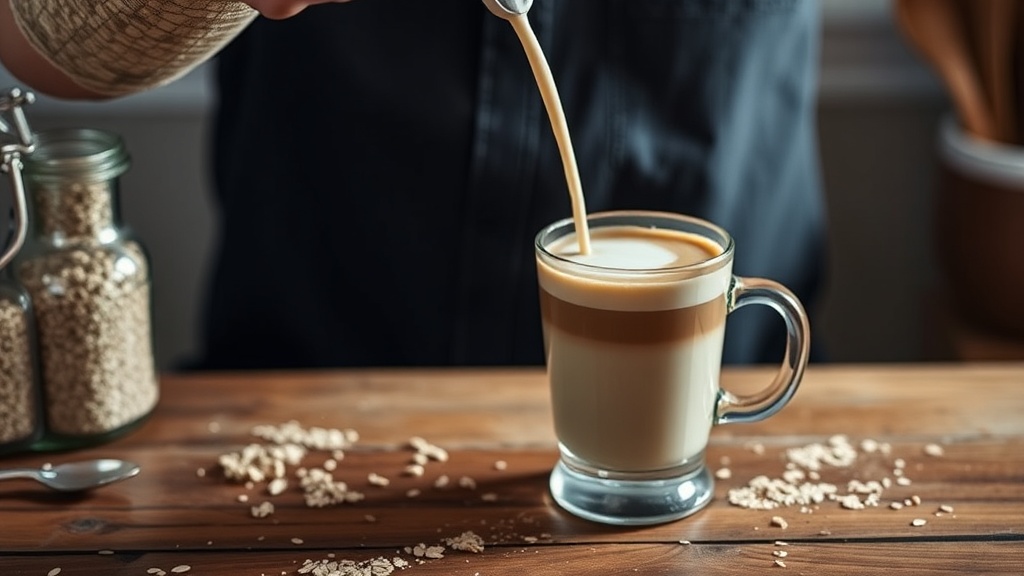
Making Your Own Oat Milk for Better Coffee Lattes

Nearly 75% of people who switch to plant-based milks do so for dietary reasons, but many stay because of the texture—or lack thereof—in their coffee. Making your own oat milk at home gives you total control over the creaminess and sweetness, ensuring it doesn't drown out the notes of your expensive beans. This guide covers the specific ratios, equipment, and temperature controls needed to create a milk that actually foams like the stuff you buy at a high-end cafe.
What Ingredients Do You Need for Homemade Oat Milk?
You need organic rolled oats, filtered water, and a pinch of sea salt to create a high-quality base.
The quality of your oats matters more than you might think. While quick oats work in a pinch, they often result in a gummy, thick texture that can ruin a latte. I prefer using rolled oats because they have a consistent starch content. You can also add a touch of vanilla extract or a tiny bit of maple syrup if you want a hint of sweetness, but keep it minimal to avoid masking the coffee.
Water quality is the other big factor. If your tap water tastes like chlorine, your oat milk will too. Use filtered water to ensure the flavor is clean. It's a small detail, but it makes a massive difference when you're trying to highlight the nuances of a light roast.
Here is a quick breakdown of the basic components:
- The Base: 1 cup of rolled oats (not steel-cut, which are too hard to blend effectively).
- The Liquid: 3 to 4 cups of cold, filtered water.
- The Seasoning: A tiny pinch of sea salt to brighten the flavor.
- Optional: 1/2 teaspoon of vanilla bean paste for texture.
Don't forget that even a tiny amount of salt helps balance the natural grain sweetness. It's the same reason we salt chocolate or caramel—it makes the flavors pop.
How Do You Make Oat Milk Without It Being Slimy?
To prevent a slimy texture, use cold water and never blend the mixture for more than 30 to 45 seconds.
The biggest mistake people make is over-blending. When you blend oats for too long, the friction generates heat and breaks down the starches into a thick, snot-like consistency. It's a total bummer. To avoid this, keep your water ice-cold. The cold temperature keeps the starches stable during the high-speed blending process.
I've found that a high-speed blender like a Vitamix or a Blendtec works wonders, but you have to be disciplined. If you're using a standard kitchen blender, you'll need to be even more careful about the duration. Once you hit that 45-second mark, stop immediately. Even if it doesn't look perfectly smooth yet, stop anyway. You can strain out the grit later.
After blending, pour the mixture through a nut milk bag or a fine-mesh sieve lined with cheesecloth. Do not squeeze the bag too hard. I know it's tempting to squeeze every last drop out to get more "yield," but squeezing forces the starches through the mesh, which is exactly what creates that slimy mouthfeel. Let gravity do the work.
If you're serious about your home coffee setup, you're likely already tracking your measurements. Using a scale is a great habit to carry over from your brewing process. If you haven't already, check out why your kitchen scale is the most important tool for consistency to ensure your ratios are perfect every time.
The Step-by-Step Process
- Chill your water: Use water straight from the fridge.
- Combine: Add oats, water, and salt to the blender jar.
- Blend: Pulse for 10 seconds, then blend on high for no more than 30-45 seconds.
- Strain: Pour through a nut milk bag into a clean jar.
- Store: Keep in the fridge and use within 3-4 days.
One thing to note: homemade oat milk doesn't have the stabilizers found in brands like Oatly. This means it might separate in the fridge. That's normal. Just give it a quick shake before you use it in your latte.
How Do You Froth Oat Milk for Lattes?
To create microfoam, heat your oat milk to approximately 140°F (60°C) and use a handheld milk frother or a steam wand.
If you try to froth cold oat milk, you'll just get bubbles. You need heat to expand the proteins and fats slightly, even though oat milk has less protein than dairy. The temperature is key. If you go above 160°F, the oat milk can taste "cooked" or overly cereal-like, and it might even curdle if your coffee is particularly acidic.
I usually use a handheld aerolatte or a professional steam wand if I'm using a machine like a Breville. If you're using a steam wand, make sure you're injecting air during the "stretching" phase (the chirping sound) and then focus on the vortex to create that silky microfoam.
The texture of homemade milk can vary based on how much you strain it. If you want a much creamier latte, you might want to add a teaspoon of neutral oil, like grapeseed oil, during the blending phase. It sounds strange, but it mimics the mouthfeel of fat in dairy milk. (I've tried it with coconut oil, but it can leave a weird aftertaste if you aren't careful.)
Comparing different methods of making and using oat milk can help you decide which way to go:
| Method | Texture Quality | Effort Level | Best For |
|---|---|---|---|
| Blender + Nut Milk Bag | Light & Silky | Medium | Daily Lattes |
| High-Speed Blender Only | Thick/Grainy | Low | Iced Coffee |
| Commercial (Oatly/Chobani) | Very Consistent | Very Low | Busy Mornings |
While the commercial options are incredibly convenient, they often contain added oils and gums that you can't control. Making your own allows you to focus on the flavor of the coffee itself. If you're using a high-end light roast, you don't want a heavy, processed milk masking those delicate floral notes.
One final tip: if your milk is separating too much in your coffee, it might be due to the acidity of your brew. If you're using a very light roast, the pH level might be causing a reaction. This isn't a flaw in your milk, but a chemical reaction between the plant proteins and the coffee acids. To mitigate this, ensure your milk is warm, not boiling, when you pour it into the coffee.
Steps
- 1
Soak the oats in water for 30 minutes
- 2
Blend the oats and water until smooth
- 3
Strain the mixture through a fine nut milk bag
- 4
Chill before frothing for best results