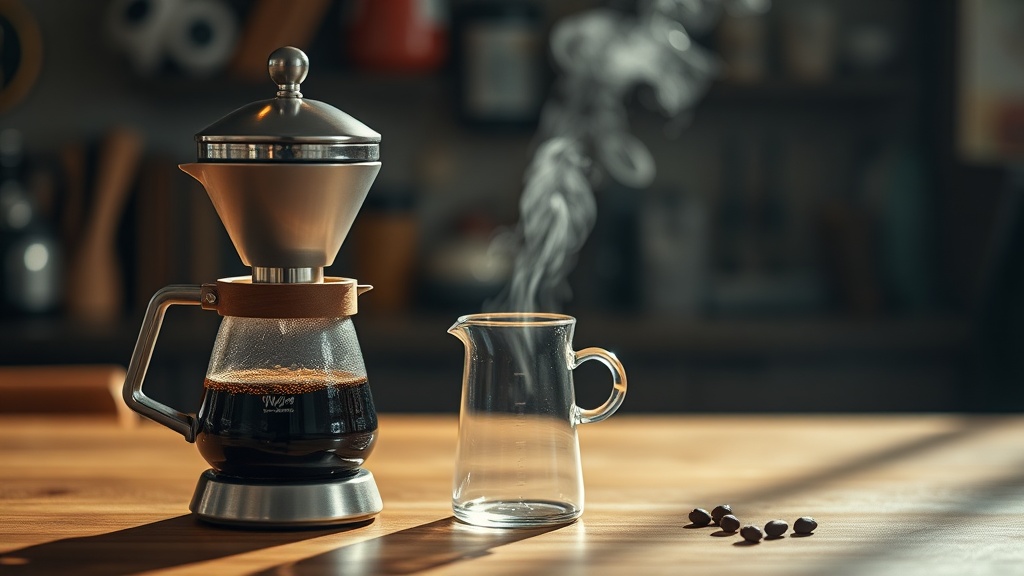
The Complete Guide to Brewing Perfect Coffee at Home

Great coffee at home isn't reserved for baristas with $5,000 setups. This guide covers every brewing method worth knowing—pour-over, French press, AeroPress, drip, and espresso—with specific gear recommendations, grind settings, and techniques that actually work. By the end, you'll know exactly which setup fits your morning routine (and budget).
What Equipment Do You Actually Need to Brew Coffee at Home?
The short answer: a grinder, a brewing device, and fresh beans. Everything else—scales, kettles, fancy filters—is optional (though some of it genuinely helps).
Here's the thing about home coffee gear: it's easy to fall down a rabbit hole of accessories. Start with the basics. A Baratza Encore grinder ($149) remains the entry-level standard for good reason—it's consistent, repairable, and produces grounds suitable for every method below. Blade grinders chop beans unevenly; that inconsistency extracts poorly and tastes bitter.
For brewing devices, consider your lifestyle. Pour-over rewards patience. French press forgives mistakes. Drip machines handle volume. Espresso demands dedication—and deep pockets.
| Brewing Method | Equipment Cost | Time Required | Best For |
|---|---|---|---|
| Pour-Over (V60/Chemex) | $30-$100 | 3-4 minutes | Highlighting single-origin beans |
| French Press | $25-$50 | 4-5 minutes | Full-bodied, forgiving brews |
| AeroPress | $40 | 2 minutes | Travel, experimentation, one cup |
| Automatic Drip | $150-$300 | 5-8 minutes | Multiple cups, busy mornings |
| Espresso | $400-$2,000+ | 30 seconds-2 minutes | Concentrated shots, milk drinks |
Worth noting: the OXO Brew 8-Cup ($200) recently earned top marks from America's Test Kitchen for automatic drip—it's the rare machine that hits proper brewing temperature (195-205°F) consistently.
How Does Grind Size Affect Coffee Flavor?
Grind size controls extraction speed, which determines whether your coffee tastes bright and sour (under-extracted), balanced and sweet (properly extracted), or bitter and hollow (over-extracted).
Think of it like this: water flows through coarse grounds slowly—contact time increases, extraction deepens. Fine grounds present more surface area to water—extraction happens fast. Match your grind to your brew method, or everything else falls apart.
The catch? Most people grind too fine for French press (causing sludge and bitterness) and too coarse for pour-over (producing weak, sour cups).
Grind Size Reference by Method
- French press: Coarse—like kosher salt
- Cold brew: Extra coarse—rough chunks
- Chemex: Medium-coarse—rough sand
- Drip machine: Medium—regular sand
- V60 / pour-over: Medium-fine—fine sand
- AeroPress: Fine—slightly coarser than espresso
- Espresso: Very fine—powdered sugar consistency
Burr grinders (conical or flat) crush beans between two abrasive surfaces. Blade grinders slice them with a spinning propeller—think blender versus mortar and pestle. The difference in cup quality justifies the price jump. If you're serious about any method below pour-over, invest in a burr grinder first.
What's the Best Way to Make Pour-Over Coffee?
The Hario V60 and Chemex dominate home pour-over for good reason—they produce clean, nuanced cups that showcase high-quality beans.
Start with 20 grams of coffee (medium-fine grind) to 320 grams of water—roughly a 1:16 ratio. Heat water to 200°F (just off boil). Place your dripper on a carafe or mug, insert a paper filter, and rinse it with hot water. This removes papery taste and preheats your vessel. Don't skip this step.
Add grounds. Start your timer. Pour 40 grams of water in slow circles, saturating all the coffee. Wait 30 seconds—this "bloom" releases trapped CO2 and prepares the bed for even extraction. Then pour the remaining water in controlled circles, avoiding the filter edges. Total brew time: 2:30 to 3:00.
That said, pour-over rewards practice. Variables matter:
- Water temperature: Dark roasts prefer 195°F; light roasts extract better at 205°F
- Pour speed: Faster pours agitate more—increasing extraction
- Stirring: A gentle swirl after pouring helps even out the bed (some purists disagree)
The Chemex uses thicker filters than the V60, producing a cleaner cup with less body. It's beautiful on a counter—designed in 1941 by a chemist, still manufactured in Massachusetts—but the thick paper can mute subtle flavors in delicate coffees.
Is French Press Coffee Worth the Extra Cleanup?
Absolutely—if you enjoy full-bodied, rich coffee with texture. The metal mesh filter allows oils and fine particles through, creating that signature mouthfeel drip coffee lacks.
The technique couldn't be simpler. Add 30 grams of coarse-ground coffee to your press. Pour 500 grams of water just off boil. Stir once. Place the lid (plunger up) and wait four minutes. Press slowly—don't rush it. Serve immediately.
Here's the thing most guides miss: French press over-extracts quickly. Those grounds keep brewing in the bottom even after pressing. Transfer coffee to a thermal carafe or mug within a minute, or that second cup turns bitter and chalky.
Bodum remains the category leader—their Chambord model ($40) uses borosilicate glass and stainless steel, though the plastic lid feels cheap at that price point. For something sturdier, the Frieling stainless steel double-wall press ($100+) insulates better and won't shatter when knocked off the counter.
Can You Make Real Espresso at Home Without Spending Thousands?
True espresso—9 bars of pressure, 25-30 second extraction, concentrated crema-topped shots—requires specialized equipment. Manual lever machines, semi-automatic pumps, and super-automatics each trade convenience for control (and cash).
The Breville Barista Express ($750) remains the entry point for legitimate home espresso. Built-in conical burr grinder, PID temperature control, and enough pressure to extract real shots. It's not café-quality—you won't replicate what your favorite Nashville roaster pulls—but it's close enough for milk drinks and americanos.
Manual options like the Flair Espresso Maker ($160-$300) produce excellent shots through pure elbow grease. No electricity, no pumps—just you, a lever, and physics. The learning curve is steep. The results, once dialed in, rival machines costing triple.
Worth noting: espresso demands fresh beans (roasted within 2-4 weeks), consistent grinding, and patience. If you're not willing to waste a few shots learning, stick to AeroPress "pseudo-espresso" instead. It's not the same thing—but it's 80% there for 10% of the effort.
Espresso Machine Comparison for Home Use
| Machine | Price | Pros | Cons |
|---|---|---|---|
| Flair Classic | $160 | Portable, no electricity, true 9-bar pressure | Manual effort, no steaming, learning curve |
| Breville Bambino Plus | $500 | Compact, automatic milk frothing, heats fast | Requires separate grinder, limited customization |
| Gaggia Classic Pro | $450 | Repairable, standard 58mm portafilter, moddable | Stock temperature unstable, needs upgrades |
| Rancilio Silvia | $800 | Commercial-grade components, decades of reputation | Single boiler (wait between shots/steam) |
What About Water Quality and Temperature?
Coffee is 98% water—ignore this at your peril. Hard water (high mineral content) extracts differently than soft water, and chlorine (common in municipal supplies) ruins coffee outright.
British coffee expert James Hoffmann (former World Barista Champion) recommends third-wave water—either reverse osmosis with added minerals, or filtered tap with Third Wave Water mineral packets ($15 for 12 gallons). In Nashville, the municipal water runs moderately hard—fine for coffee, but charcoal filtration improves taste noticeably.
Temperature matters too. Below 195°F, extraction stalls—sour, weak coffee results. Above 205°F, you scorch the grounds—bitterness dominates. Electric kettles with temperature control (Fellow Stagg EKG at $165, or the budget Cosori gooseneck at $70) remove guesswork. Worth it if you make pour-over regularly.
How Should You Store Coffee Beans?
Air, light, heat, and moisture destroy coffee—rapidly. Whole beans last 2-4 weeks after roasting; ground coffee degrades within hours. Buy whole beans. Grind before brewing. Full stop.
Store beans in an opaque, airtight container at room temperature. The vacuum canisters (Airscape, Fellow Atmos) work well but aren't mandatory—a mason jar in a dark cabinet suffices. Never refrigerate or freeze coffee in the original bag—condensation forms when you open it, introducing moisture.
That said, freezing works if done properly. Portion beans into small airtight containers, freeze immediately after roasting, and thaw completely before opening. No condensation, no problem. Useful for buying in bulk from roasters like Frothy Monkey (Nashville's original coffee roasters) or subscribing to shipments from Onyx Coffee Lab.
Putting It All Together: A Morning Routine That Works
Start with fresh beans from a local roaster—Crema in Nashville, Counter Culture if you're ordering online, or any roaster with roast dates printed on the bag. Grind 20 grams medium-fine. Heat water to 200°F.
Pre-wet your V60 filter. Bloom the grounds. Pour slowly. Wait. Drink black first—appreciate what the bean actually tastes like before adding milk or sugar.
The ritual matters. Five minutes of focused preparation beats rushed automation every time. You'll taste the difference.